
mL vs. cc vs. cm³: Are They Actually the Same Measurement?
You have seen all three — mL on a juice bottle, cc on a syringe, and cm³ in a science book. It is fair to ask if they mean the same thing.
A doctor says “5 cc.” A recipe says “250 mL.” A textbook says “250 cm³.” Are those amounts equal, or just close?
The short answer is yes, they are the same when you are measuring volume. One milliliter is exactly the same amount of space as one cubic centimeter, and one cc is just another name for that same amount.
Once you see where each one comes from, the confusion around ml vs cc vs cm3 disappears.
What Is a Milliliter (mL)?
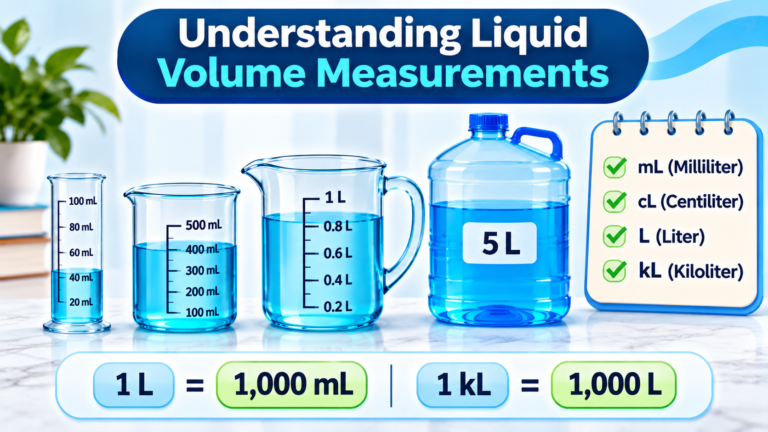
A milliliter is a unit of volume in the metric system. “Milli” means one-thousandth, so one milliliter is one-thousandth of a liter.
A liter is a little more than a quart, about 33.8 fluid ounces. A standard water bottle is often 500 mL. A teaspoon holds about 5 mL.
Milliliters measure liquids. You will see mL on food and drink labels, medicine bottles, and measuring cups. Think of mL as the everyday version of volume — the one for kitchens and pharmacies.
What Is a Cubic Centimeter (cm³)?
A cubic centimeter is also a unit of volume, but it comes from length.
Picture a tiny cube. Each side is one centimeter long, about the width of your fingernail. The space inside that cube is one cubic centimeter, written as 1 cm³.
Scientists like cm³ because it links volume to length. Multiply a box’s length, width, and height in centimeters, and you get its volume in cubic centimeters.
You will see cm³ in textbooks and lab reports. Engine size is a classic example. A small motorcycle engine might be listed as 125 cm³. That is the volume swept by the pistons.
Cm³ can describe solids, liquids, or gases. A block of wood and a bottle of water can both be measured in cm³.
What Is a cc?
Cc stands for cubic centimeter. It is the same unit, written in a shorter way.
Instead of writing cm³ with a small raised 3, people write cc. The letters mean exactly the same thing.
Doctors and nurses have used cc for a long time, especially for injections. You will hear “Give 2 cc” or see “10 cc syringe” in a clinic. It is short and quick to say.
Many hospitals now prefer mL because it is clearer on a printed label. But cc has not gone away. Think of it as the medical nickname for cm³.
ml vs cc vs cm3: Are They Actually the Same?
Yes. By volume, they are exactly the same.
1 mL = 1 cm³ = 1 cc
That is not an approximation. It is an exact match. One milliliter of water fills exactly one cubic centimeter of space.
If a recipe calls for 100 mL, a lab calls for 100 cm³, and a nurse calls for 100 cc, they are all asking for the same amount.
Where Each Unit Is Used Most
Even though the three are equal, each field has a favorite.
Medicine: cc and mL
In medicine, you will see both. Syringes are often marked in both. A doctor might say cc out of habit, while the label on a medicine bottle says mL.
For liquid medicine, mL is now the standard in most places. A children’s medicine might say “Give 5 mL every six hours.” That is the same as 5 cc, but mL is clearer in print. Cc still shows up for injections and older medical notes.
Science: cm³
In science class and in the lab, cm³ is the standard. Students measure a block and report its volume in cm³. Chemists use it for solids and gases because it fits neatly into formulas.
Cooking and Everyday Life: mL
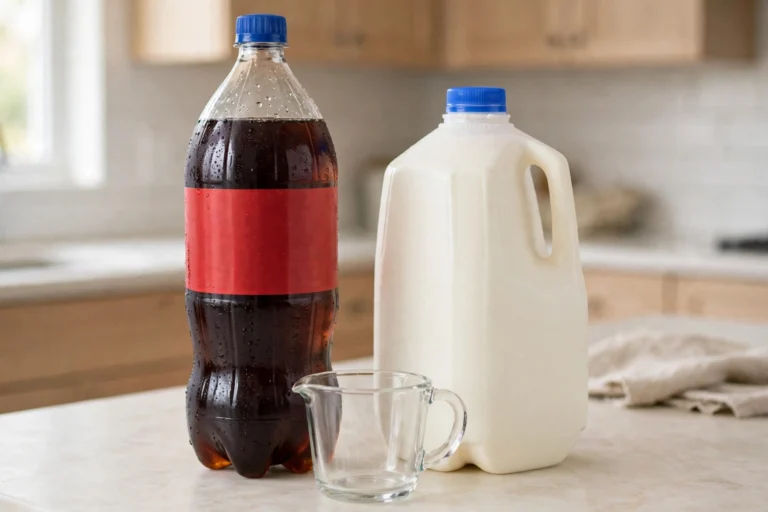
In the kitchen and at the store, mL rules. Recipes, nutrition labels, and drink cans almost always use mL or liters. A can of soda in Europe might say 330 mL. That is the same as 330 cm³, but no soda can would write it that way.
Why Do We Have Three Names for the Same Thing?
History is the answer. Each field kept the name that made sense to it.
The liter was made as a practical measure for liquids — water, milk, and wine. Milliliter came naturally from it, as a small fraction of a liter.
The cubic centimeter came from geometry and science. Scientists needed a way to talk about volume that came straight from length, and the centimeter cube was the perfect building block.
Cc came later as shorthand. Doctors needed to write quickly, and “cc” was faster than “cm³,” especially by hand, before computers made the little superscript 3 easy to type.
Over time, all three survived. Medicine kept cc. Science kept cm³. Everyday life kept mL.
When It Matters — and When It Doesn’t
For most everyday uses, the difference does not matter. You can swap them freely when converting volume to volume.
It matters more in medicine and precision work. In medicine, always follow the exact unit on the label. Even though 5 mL equals 5 cc, do not guess or rewrite a dose. Use the tool that came with the medicine, and check the number twice.
In science, use the unit your teacher or lab asks for. If a problem asks for cm³, give it in cm³, even if you did the math in mL. The number is the same, but the format matters.
In cooking, it almost never matters. A recipe for 250 mL is the same as 250 cm³.
Conversion Examples and Table
Because the three units are equal, conversion is simple. You do not multiply or divide. You just swap the label. For example, 5 mL = 5 cm³ = 5 cc, about one teaspoon. And 250 mL = 250 cm³ = 250 cc, about one cup.
| Milliliters (mL) | Cubic Centimeters (cm³) | cc |
|---|---|---|
| 1 | 1 | 1 |
| 5 | 5 | 5 |
| 10 | 10 | 10 |
| 50 | 50 | 50 |
| 100 | 100 | 100 |
| 250 | 250 | 250 |
| 500 | 500 | 500 |
| 1,000 | 1,000 | 1,000 |
Remember that 1,000 mL makes one liter. That also means 1,000 cm³ makes one liter. For U.S. cooks, one fluid ounce is about 29.57 mL.
Common Confusion and Mistakes
Thinking cc is bigger or smaller than mL. It is not. The different letters make it feel like one must be larger, but the volume is identical.
Mixing up cm³ with cm. A centimeter (cm) is a length. A cubic centimeter (cm³) is a volume. One is a line, the other is a box. You need the little 3 to show you mean space, not length.
Confusing mL with mg. This matters in medicine. Milliliters measure volume — how much space a liquid takes up. Milligrams (mg) measure mass — how much it weighs. A 5 mL spoonful might contain 100 mg of drug, but 5 mL and 5 mg are not the same. Never swap them.
Assuming cc means something special in engines. A “150cc motorcycle” does not mean the bike holds 150 cc of fuel. It means the engine displacement is 150 cubic centimeters — a size rating, not a fuel tank size.
Frequently Asked Questions
Is 1 mL the same as 1 cc?
Yes. One milliliter is exactly the same volume as one cc. A 5 mL dose and a 5 cc dose are the same dose.
Is 1 cm³ the same as 1 mL?
Yes. One cubic centimeter is exactly one milliliter. One comes from measuring a cube, the other from measuring a liquid, but they describe the same amount of space.
Why do doctors say cc instead of mL?
Mostly out of tradition. Doctors have used cc for decades, especially for injections. Many hospitals now prefer mL on printed labels because it is clearer.
Which unit should I use?
Use mL for cooking, drinks, and liquid medicine. Use cm³ for science, math, and engineering. You can use cc in a medical context, but mL is usually the safer choice in writing.
Is cc used for solids too?
Yes, technically. Since cc means cubic centimeter, it can describe a solid, a liquid, or a gas. In practice, you will mostly see cc for liquids in medicine and for engine size. For a solid block, cm³ is more common.
Conclusion
mL, cc, and cm³ look like three different measurements, but they are three names for the same amount of volume. One milliliter fills one cubic centimeter, and one cc is just the short way of writing cubic centimeter.
Each name has its own home: mL in kitchens and pharmacies, cm³ in science labs, and cc in clinics.
When you see ml vs cc vs cm3, do not worry about converting. Just swap the label and keep the number the same. Five is five, whether it says mL, cm³, or cc.