Standard Bottle, Can, and Cup Sizes in mL and Liters
Pick up a bottle of water and the label says “500 mL.” Pour coffee into your favorite mug and wonder how much it holds. Open a can of soda and notice it says 330 mL — or was it 355 mL? These numbers are everywhere, but few of us know what the standard sizes are.
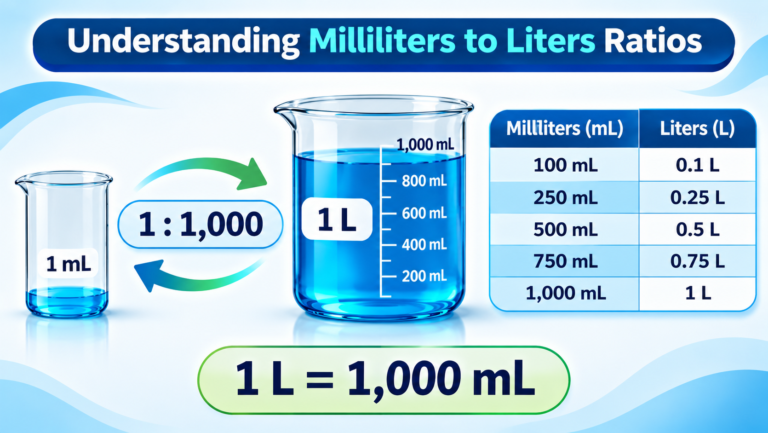
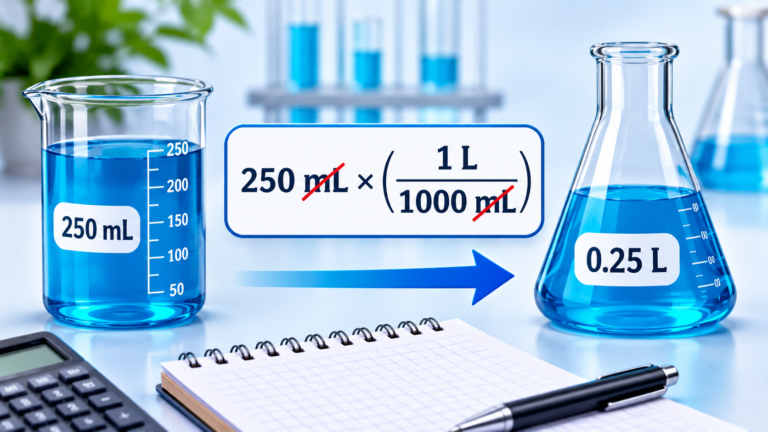
This guide covers the standard bottle, can, and cup sizes in mL and liters, explains the country differences, and shows you how to convert between them. You only need one rule: 1 liter equals 1000 milliliters. Everything else follows from that.
Why Sizes Differ by Country
Drink sizes grew out of local habits and old measuring systems. The United States still uses fluid ounces, while the United Kingdom and Europe use milliliters and liters.
So the same product can look different on shelves in different countries. A can of cola in London is usually 330 mL. The same brand in New York is usually 355 mL, which is 12 US fluid ounces. Neither is wrong. Once you know the common sizes, reading any label becomes second nature.
Standard Sizes at a Glance
| Container | Common sizes |
|---|---|
| Water or soda bottle | 330 mL, 500 mL, 750 mL, 1 L, 1.5 L, 2 L |
| Soda can (UK/EU) | 330 mL |
| Soda can (US) | 355 mL (12 US fl oz) |
| Wine bottle | 750 mL |
| Beer can or bottle | 330 mL, 440 mL, 500 mL |
| Spirits bottle | 700 mL (EU), 750 mL (US) |
| Juice carton | 250 mL, 500 mL, 1 L |
| Metric cup / US cup | 250 mL / 236.6 mL |
| Mug / tea cup | 300–350 mL / 150–200 mL |
| Espresso shot | 30 mL single, 60 mL double |
Water and Soda Bottles
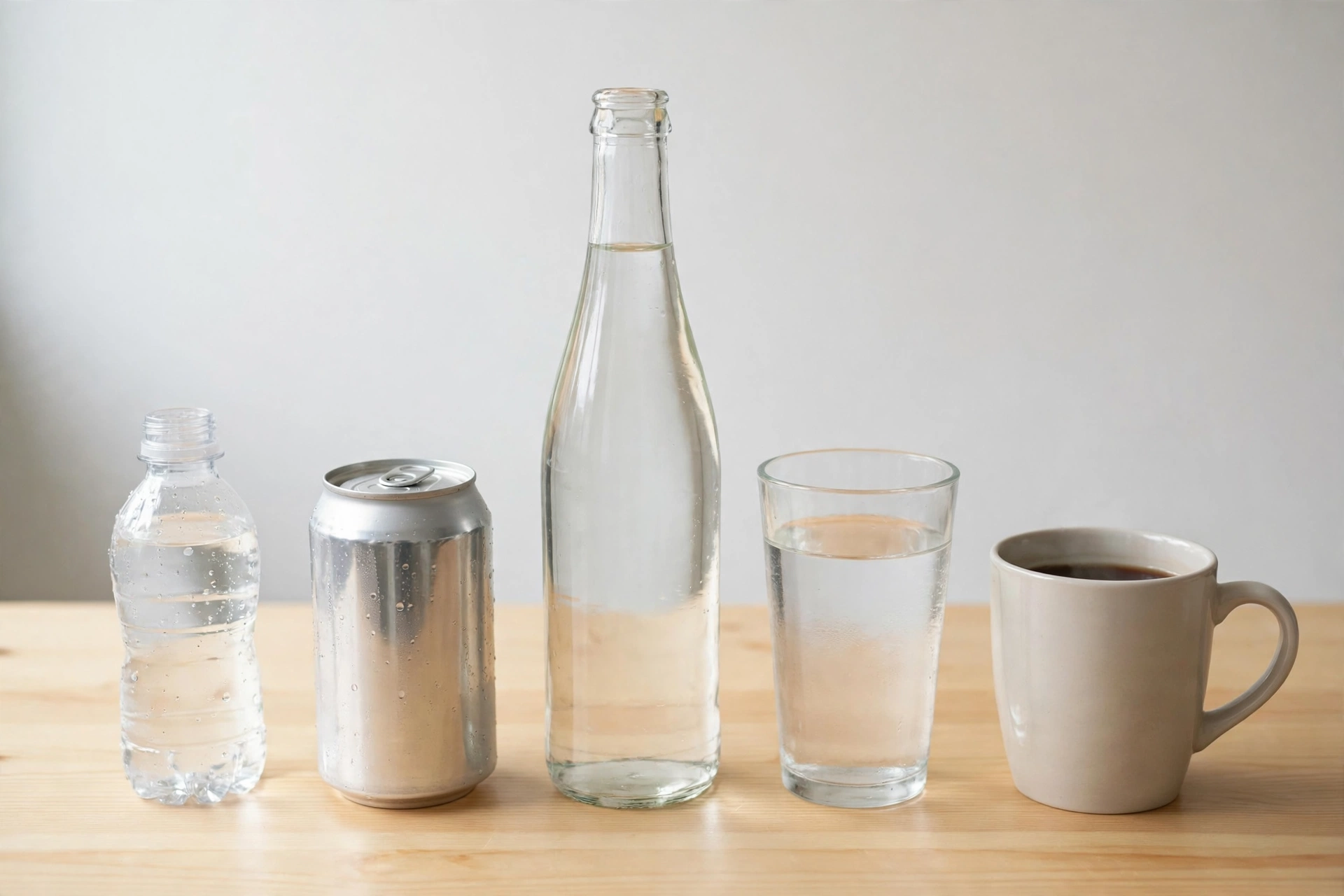
The most common water bottle sizes are 330 mL, 500 mL, 750 mL, 1 liter, 1.5 liters, and 2 liters. A 330 mL bottle is a small single serving, the kind found in a lunchbox. A 500 mL bottle is the classic half-liter bottle, probably the single most common water bottle size in the world. Two 500 mL bottles equal exactly 1 liter.
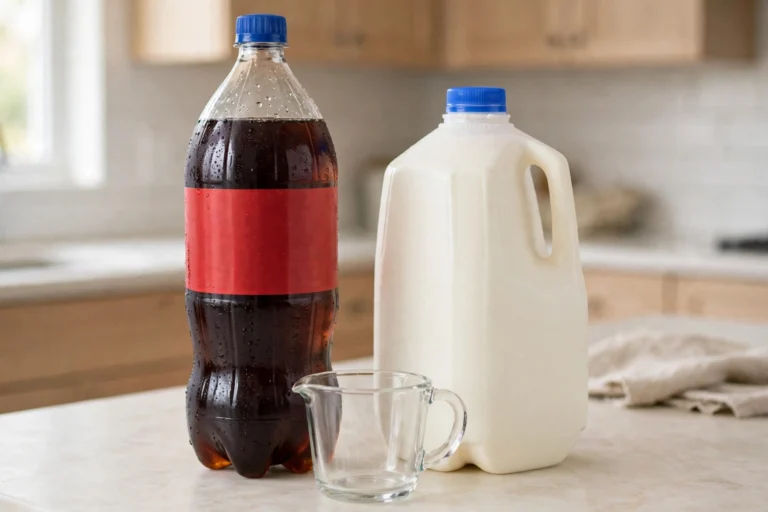
Soda bottles follow the same pattern. Small single-serve bottles are usually 330 mL or 500 mL, while sharing bottles are 1 liter, 1.5 liters, or 2 liters. For a party, one 2 liter bottle is almost always cheaper per liter than four 500 mL bottles.
Soda Cans: 330 mL vs 355 mL
Cans show the country difference most clearly. In the United Kingdom and most of Europe, the standard soda can is 330 mL. In the United States, the standard can is 12 US fluid ounces, about 355 mL — a difference of 25 mL, roughly a small mouthful.
Larger 500 mL cans are also common, and 150 mL mini cans exist for children or portion control.
If a recipe or label says “one can,” check which can it means — the difference matters when counting sugar, caffeine, or calories.
Wine, Beer, and Spirits
A standard wine bottle holds 750 mL, or three-quarters of a liter. This size is used almost everywhere and has been the norm for decades.
Beer comes in a wider range. A standard beer can or bottle is 330 mL in much of Europe and the UK, while 440 mL cans are very common for craft beer and supermarket multipacks. You will also find 500 mL bottles and cans, the classic half-liter serving.
Spirits bottles differ by region. In the European Union, the standard spirits bottle is 700 mL. In the United States, it is 750 mL.
Juice, Milk, and Cartons
Juice cartons most commonly come in 250 mL, 500 mL, and 1 liter. The 250 mL carton is the single-serve size, often with a straw, made for lunchboxes and school bags. The 500 mL carton is a small family size, and the 1 liter carton is the standard fridge size.
Milk follows the same pattern, with the 1 liter carton the everyday default.
Here is a worked example. A recipe calls for 1 liter of juice, and you only have 250 mL cartons. Since 1 liter equals 1000 mL, divide 1000 by 250 to get 4. You need four small cartons.
Cups, Mugs, and Coffee
Cups are where conversions get confusing, because “cup” means different things in different places. A metric cup is exactly 250 mL. A US cup is 236.6 mL. The difference is only 13.4 mL, but in baking, where precision matters, it adds up across several cups.
A typical mug holds about 300 to 350 mL, so measure with a jug when accuracy matters.
A standard tea cup holds about 150 to 200 mL. Coffee has its own small measures: a single espresso shot is about 30 mL, and a double shot is about 60 mL, roughly a quarter of a metric cup.
How Many Small Bottles Make a Liter?
The math is simple once you remember that 1 liter is 1000 mL. Just divide 1000 by the size of the bottle.
- 330 mL bottles: 1000 ÷ 330 is about 3.03, so three bottles give you 990 mL, just short of a liter.
- 500 mL bottles: 1000 ÷ 500 = 2, so two bottles make exactly 1 liter.
- 250 mL cartons: 1000 ÷ 250 = 4, so four cartons make exactly 1 liter.
- 750 mL bottles: 1000 ÷ 750 is about 1.33, so one bottle is three-quarters of a liter.
Remember: two 500 mL bottles or four 250 mL cartons make exactly a liter.
How to Read a Drink Label
Look for a number followed by “mL” or “L” on the front or back of the container. A bottle marked “1.5 L” holds 1500 mL, and a can marked “33 cL” holds 330 mL, because a centiliter is 10 mL.
Watch out: some labels show nutrition per serving, not for the whole container. A 500 mL bottle might list values for a 250 mL serving — drink it all and you must double those numbers. And since sizes vary by country and brand, always check the label on the product in front of you.
Common Mistakes to Avoid
Assuming a can is always 330 mL. In the US, a standard soda can is 355 mL. The 25 mL difference is small, but it matters for recipes and nutrition counts.
Treating a US cup and a metric cup as the same. A metric cup is 250 mL and a US cup is 236.6 mL. Mixing them up in baking can change the result, especially with liquids.
Guessing a mug’s volume. Mugs range from 250 mL to over 400 mL, so measure yours before assuming a standard amount.
Confusing 700 mL and 750 mL spirits bottles. European bottles are usually 700 mL, while American bottles are usually 750 mL. Check the label if the exact volume matters.
Frequently Asked Questions
What is the standard size of a water bottle?
The most common sizes are 500 mL and 1 liter, with 330 mL single-serve bottles and 1.5 and 2 liter family sizes.
How many mL is a standard soda can?
330 mL in the UK and Europe, and 355 mL (12 US fluid ounces) in the US.
How many 500 mL bottles make 2 liters?
Four: 2 liters is 2000 mL, and 2000 divided by 500 is 4.
What size is a standard wine bottle in mL?
750 mL, or 0.75 liters. Half bottles hold 375 mL, and magnums hold 1.5 liters.
How many mL is one cup?
A metric cup is 250 mL and a US cup is 236.6 mL. The difference is small for everyday cooking but matters in baking.
Conclusion
Water and soda bottles usually come in 330 mL, 500 mL, 750 mL, 1 liter, 1.5 liters, and 2 liters. Soda cans are 330 mL in the UK and Europe and 355 mL in the US. Wine bottles are 750 mL, beer is usually 330 mL, 440 mL, or 500 mL, and spirits are 700 mL in Europe and 750 mL in the US. Cups split between 250 mL metric and 236.6 mL US, mugs hold around 300 to 350 mL, and an espresso shot is about 30 mL.
The one number that ties it together is 1 liter equals 1000 mL. With that, you can work out how many small bottles make a liter, compare prices per liter, and follow any recipe with confidence. Sizes vary by country and brand, so always check the label — but now you will know exactly what you are looking at.