Metric vs. Imperial Liquid Volume: Liters vs. Gallons & Fluid Ounces
You pick up a bottle marked 2 liters and wonder how many gallons that is. A recipe calls for 500 mL, and you are not sure if that is a pint or a quart. That confusion is what metric vs imperial liquid volume is all about.
Most of the world uses liters and milliliters; the United States uses gallons, quarts, pints, and fluid ounces. Both work fine alone. The trouble starts when you switch between them for cooking, travel, or fuel. You only need a few conversions and one warning: the US and UK gallons are not the same size.
Metric vs Imperial Liquid Volume at a Glance
The metric system is decimal, based on 10s. There are 1,000 milliliters in 1 liter, so you mostly move the decimal point. The US system is not decimal. A US gallon divides into 4 quarts, 8 pints, and 128 fluid ounces.
Remember these four first:
- 1 US gallon = 3.785 liters
- 1 liter = 0.264 US gallons
- 1 liter = 33.814 US fluid ounces
- 1 US fluid ounce = 29.574 milliliters
For British sources, add one more: 1 UK imperial gallon = 4.546 liters, about 20% larger than a US gallon.
The Metric Side: Liters and Milliliters
The metric system is used for liquids in almost every country outside the United States. It was designed to be simple and consistent.
What Is a Liter?
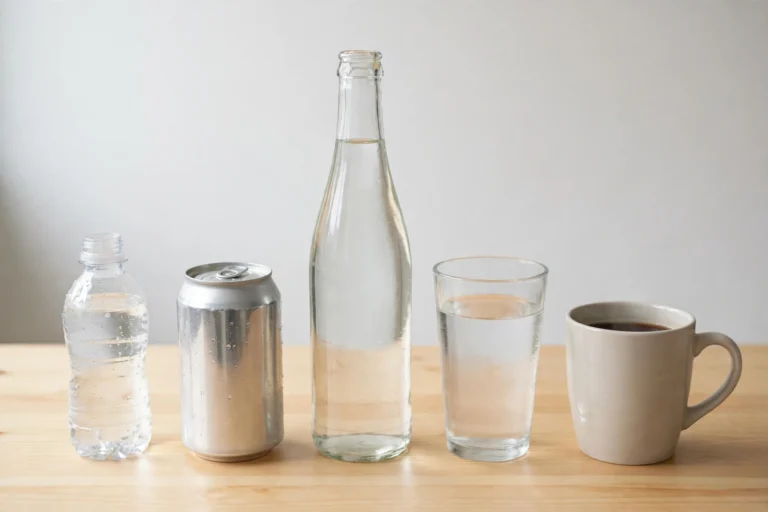
A liter is the main metric unit for liquids. You will see it on soda bottles, milk cartons, water bottles, and fuel pumps. A large soda bottle is often 2 liters. A milk carton in many countries is 1 liter. A reusable water bottle usually holds 500 mL to 1 liter.
What Is a Milliliter?
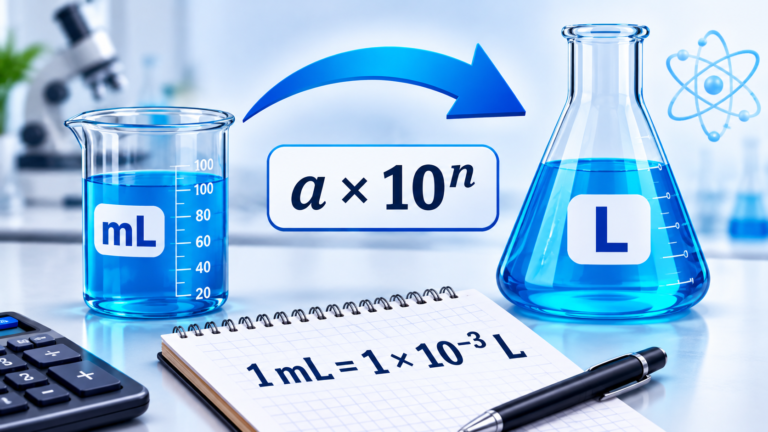
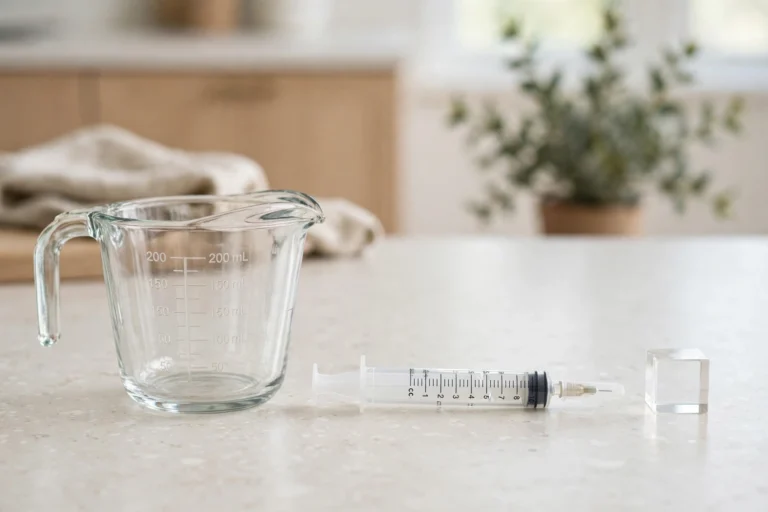
A milliliter is one-thousandth of a liter. There are 1,000 milliliters in 1 liter. Milliliters are used for small amounts, such as medicine, vanilla extract, and perfume. A teaspoon is about 5 mL, and a tablespoon is about 15 mL.
To go from liters to milliliters, multiply by 1,000; to go the other way, divide by 1,000. So 0.5 liter is 500 mL and 2.5 liters is 2,500 mL.
The Imperial and US Customary Side: Gallons, Quarts, Pints, and Fluid Ounces
The US system, often called US customary, grew out of older British units. The two split in the 19th century and are no longer identical for liquids.
The US Gallon, Quart, Pint, and Fluid Ounce
The US gallon is the largest common liquid unit in the United States. Gasoline, milk, and paint are sold by the gallon. 1 US gallon = 3.785 liters.
A US gallon divides into 4 quarts, 8 pints, and 128 fluid ounces. A quart is 32 fl oz (946 mL), a pint is 16 fl oz (473 mL), and a US cup is 8 fl oz (237 mL).
A fluid ounce measures volume, not weight. An ounce alone can mean weight, but a fluid ounce always means volume. 1 US fluid ounce = 29.574 milliliters, just under 30 mL.
The UK Imperial Gallon Is Different
The UK uses the imperial gallon, which is larger: 1 UK imperial gallon = 4.546 liters, about 0.76 liters more than a US gallon. It also divides differently: 1 UK gallon = 4 quarts = 8 pints = 160 UK fluid ounces. A UK pint is 20 UK fluid ounces, while a US pint is 16 US fluid ounces.
A UK fluid ounce is 28.413 mL, slightly smaller than a US one. The UK now uses liters for most shopping and fuel, keeping pints mainly for milk and beer — but check whether a British figure means UK gallons.
Key Conversion Facts and Tables
For daily use, round: a US gallon is about 3.8 liters, a liter is about 34 US fluid ounces, and a fluid ounce is about 30 mL. Use exact figures for medicine or science.
Liters to US Gallons and Fluid Ounces
| Liters | US Gallons | US Fluid Ounces |
|---|---|---|
| 0.5 L | 0.132 gal | 16.91 fl oz |
| 1 L | 0.264 gal | 33.81 fl oz |
| 2 L | 0.528 gal | 67.63 fl oz |
| 5 L | 1.321 gal | 169.07 fl oz |
A 2-liter soda bottle is just over half a US gallon. A 5-liter container is about 1.32 US gallons.
US Units to Liters
| US Unit | Fluid Ounces | Liters |
|---|---|---|
| 1 cup | 8 fl oz | 0.237 L |
| 1 pint | 16 fl oz | 0.473 L |
| 1 quart | 32 fl oz | 0.946 L |
| 1 gallon | 128 fl oz | 3.785 L |
A half-gallon of milk is about 1.89 liters, almost 2 liters. A quart is just short of a liter. And if a car gets 40 miles per gallon in the UK, that is about 33.3 US miles per gallon, because the UK gallon is bigger.
Everyday Examples: Milk, Soda, Fuel, and Recipes
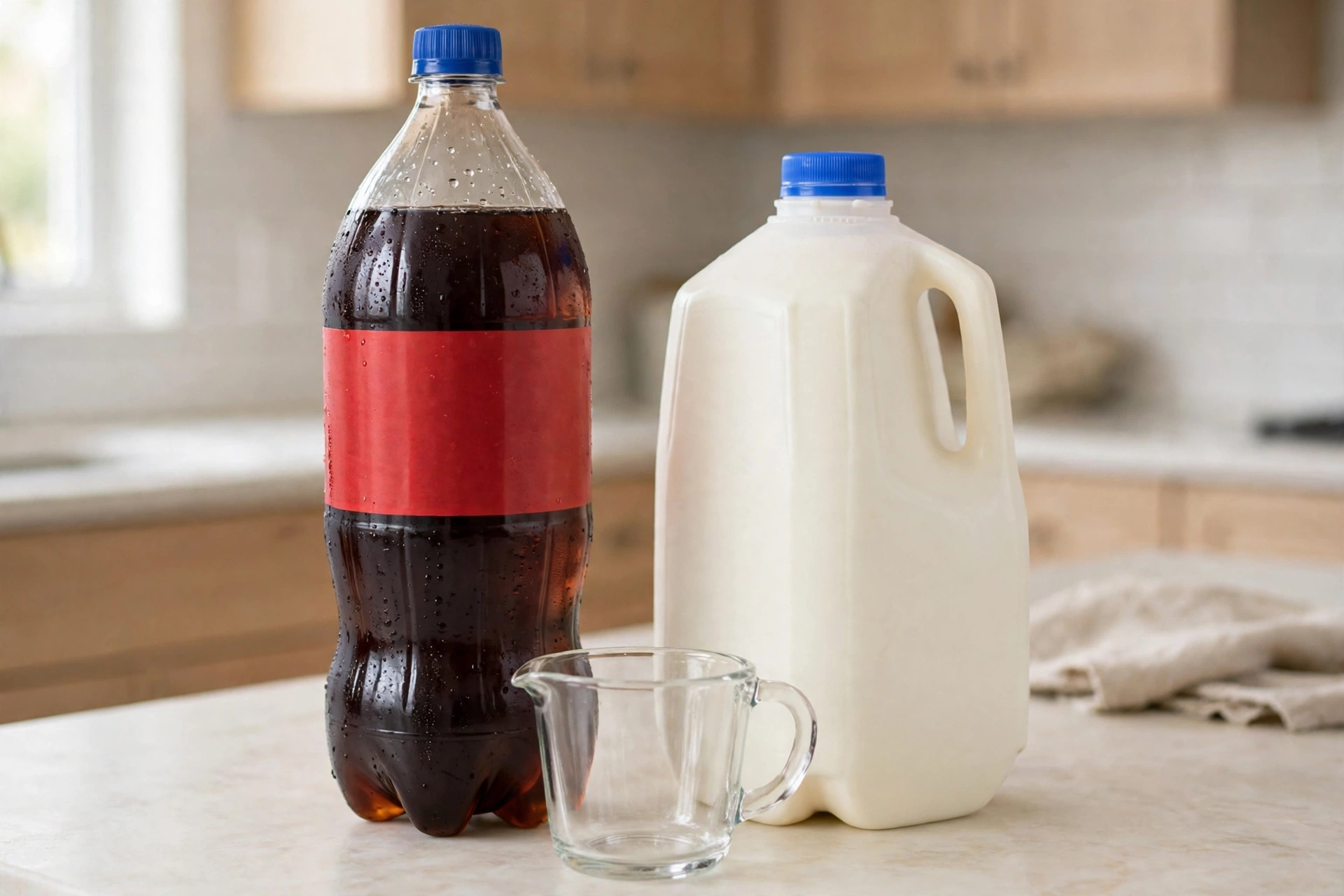
Milk and juice. In the US, milk is sold in gallons, half-gallons, quarts, and pints. A gallon is 3.785 liters and a half-gallon is 1.893 liters. Elsewhere, milk comes in 1-liter cartons or 2-liter bottles. A 2-liter bottle is a little more than a US half-gallon.
Soda and water. A US soda can is 12 fluid ounces, about 355 mL. A common metric can is 330 mL, about 11.16 fluid ounces. A 2-liter bottle holds about 67.6 fluid ounces. A 500 mL bottle is about 16.9 fluid ounces, just over a pint.
Fuel. In the US, gasoline is priced per gallon. In most other countries, it is priced per liter. A 12-gallon tank holds about 45.4 liters, and a 50-liter tank holds about 13.2 US gallons. A car using 8 liters per 100 kilometers gets about 29.4 miles per US gallon.
Recipes. A recipe calling for 250 mL of water asks for about 1 US cup, plus a little more, since a US cup is 237 mL. A recipe calling for 500 mL of stock is about 2.11 US cups. One US cup is 237 mL, and four cups is 946 mL, almost 1 liter. For baking, measure exactly.
Why Does the US Still Use Gallons?
The US customary system was inherited from Britain before metric became common. By the 1970s, gallons were already built into fuel pumps, milk cartons, cookbooks, and factory equipment. Changing all of that would have been expensive and disruptive.
A voluntary move toward metric in 1975 was never made compulsory. Science, medicine, and industry use metric units, while everyday shopping and driving still use US units. Habit matters too: people picture a gallon of milk. Measurement is partly culture, not just math.
Quick Mental Tricks for Converting on the Spot
Liters to US gallons: divide by 4, then add a little. Four liters is about 1.06 gallons, and 8 liters is about 2.11 gallons.
US gallons to liters: multiply by 4, then subtract a little. Two gallons is about 7.6 liters, and 5 gallons is about 18.9 liters.
Liters to fluid ounces: multiply by 34. A liter is 33.8 US fluid ounces, so half a liter is about 17 fluid ounces and 2 liters is about 68.
Fluid ounces to milliliters: multiply by 30. Eight fluid ounces is about 240 mL, and 16 fluid ounces is about 480 mL.
Quarts are almost liters, and a pint is about half a liter. A US quart is 946 mL, about 5% short of a liter. A pint is 473 mL, close to 500 mL.
Common Mistakes to Avoid
Mixing up US and UK gallons. A US gallon is 3.785 liters. A UK gallon is 4.546 liters. Using the wrong one makes your answer off by about 20%. American sources usually mean US gallons; British ones may mean imperial, so look for that word.
Confusing fluid ounces with ounces by weight. A fluid ounce measures volume. An ounce measures weight. Eight fluid ounces of water weighs about eight ounces, but honey weighs much more and oil weighs less.
Assuming a cup is the same everywhere. A US cup is 237 mL. A metric cup, used in Australia and many metric recipes, is 250 mL. The difference is small, but it can matter in baking.
Rounding too early. If you round 1 gallon to 4 liters and multiply by 5, you get 20 liters. The correct answer is 18.9 liters. Round only at the end.
Forgetting that a liter is not a kilogram. A liter measures volume, and a kilogram measures mass. For water, 1 liter weighs about 1 kilogram. For oil or syrup, it differs.
Frequently Asked Questions
How many liters are in a US gallon?
There are 3.785 liters in 1 US gallon, about 3.8 liters for a quick estimate.
How many US fluid ounces are in a liter?
There are 33.814 US fluid ounces in 1 liter, about 34 fl oz for a quick estimate.
Is a UK gallon bigger than a US gallon?
Yes. A UK gallon is 4.546 liters, versus 3.785 liters for a US gallon — about 20% larger, with 160 fluid ounces instead of 128.
How many milliliters are in a US fluid ounce?
There are 29.574 milliliters in 1 US fluid ounce, about 30 mL for a quick estimate. A UK fluid ounce is slightly smaller, at 28.413 mL.
Which system is better for liquid volume?
Neither is better in every case. The metric system is simpler to convert, because it is based on 10s. The US system is familiar to Americans and works well for halving recipes. The best approach is to understand both.
Conclusion
Metric vs imperial liquid volume does not have to be confusing. The metric system gives you liters and milliliters, built on powers of 10. The US system gives you gallons, quarts, pints, and fluid ounces, built on halving and doubling. The UK system looks similar, but its gallon is larger.
Remember: 1 US gallon = 3.785 liters, 1 liter = 33.814 US fluid ounces, 1 US fluid ounce = 29.574 mL, and 1 UK gallon = 4.546 liters. Use the tables for exact figures, the tricks for fast estimates, and always check whether a gallon means US or UK.