-
Party & Catering Drink Guide: Calculating Beverages in Liters and mL
Running out of drinks is the fastest way to ruin a party. Buying far too much is the most expensive way to host one. The difference between the two is a little planning in liters and milliliters. This guide shows you how to calculate drinks for any size of party: how much each guest will…
-
Liquid vs. Dry Ingredients: Why You Can’t Always Use mL to L Charts
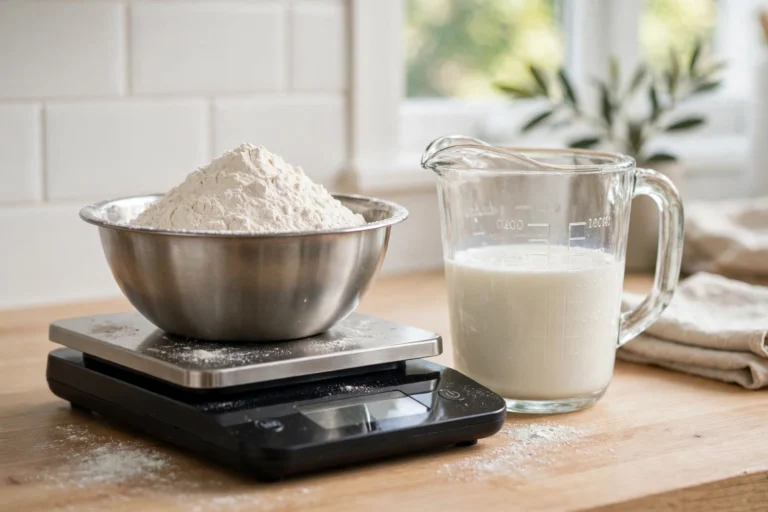
Milliliters measure volume — how much space something takes up. Grams measure mass — how much something weighs. For water, the two line up perfectly: 1 mL of water weighs exactly 1 gram. For almost everything else, they do not. That is why a milliliter-to-liter chart works beautifully for water, milk, and oil, and fails…
-
Coffee & Barista Ratios: Measuring Espresso, Milk, and Water in mL & L
Great coffee is not guesswork. Behind every balanced espresso and every smooth flat white is a ratio — a measured amount of coffee to a measured amount of water or milk. Baristas weigh and measure everything in grams and milliliters, because a few milliliters either way changes the taste. This guide covers the ratios that…
-
US Cups vs. Metric Cups vs. Milliliters: Avoiding Recipe Disasters
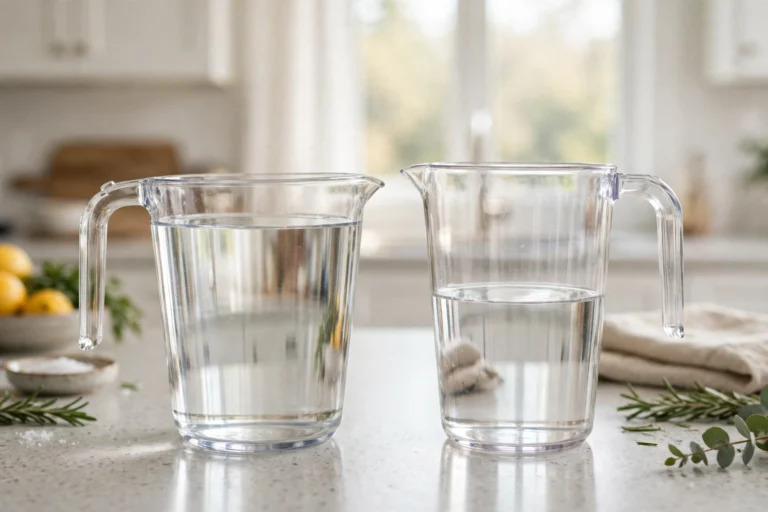
A recipe says "1 cup of milk." You measure it, follow every step, and the cake still comes out wrong — too wet, too dry, or just not right. The problem may not be your cooking at all. It may be your cup. "Cup" is not one measurement. A US cup, a metric cup, and…
-
Standard Bottle, Can, and Cup Sizes in mL and Liters
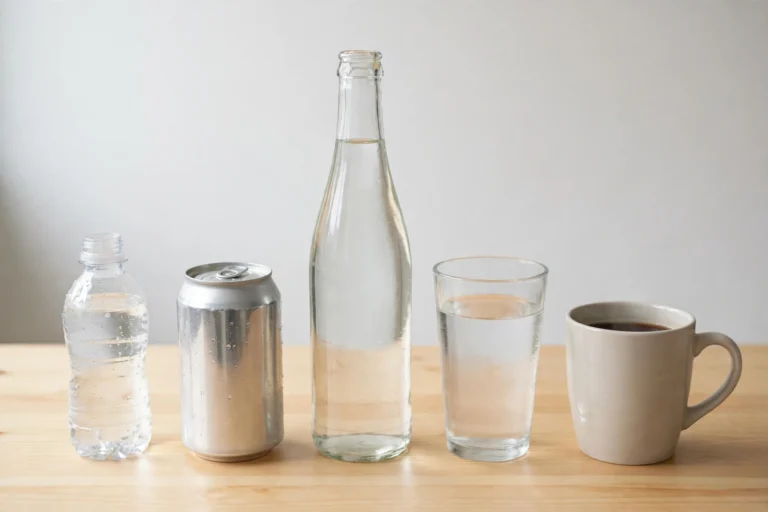
Pick up a bottle of water and the label says “500 mL.” Pour coffee into your favorite mug and wonder how much it holds. Open a can of soda and notice it says 330 mL — or was it 355 mL? These numbers are everywhere, but few of us know what the standard sizes are….
-
Milliliters to Liters in Cooking & Baking: Complete Kitchen Guide
You are halfway through a recipe when you hit a line that stops you cold: “Add 750 mL of stock.” Your jug is marked in liters, your cups are marked in cups, and the recipe uses milliliters. This guide fixes that. Once you understand ml to l cooking conversion, you will never stop mid-recipe to…
-
5 Common Mistakes People Make When Converting mL to Liters
Converting milliliters to liters is one of the simplest calculations you will ever do in a kitchen, a classroom, or a pharmacy. The rule never changes: 1 liter equals 1,000 milliliters, so you divide by 1,000. And yet people get it wrong all the time. The problem is rarely the math. It is the small…
-
Why 1000 mL Doesn’t Always Equal 1 Kilogram (Volume vs. Mass)
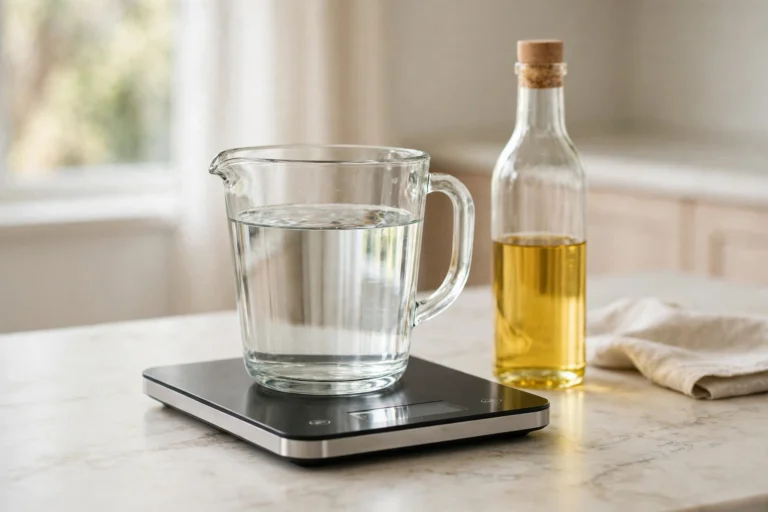
Is 1000 ml equal to 1 kg? For water, yes — almost exactly. For almost everything else, no. That surprises people, but the neat match is a special property of water, not a general rule: change the liquid, and the weight changes. The confusion comes from mixing up volume and mass. Volume is how much…
-
Metric vs. Imperial Liquid Volume: Liters vs. Gallons & Fluid Ounces
You pick up a bottle marked 2 liters and wonder how many gallons that is. A recipe calls for 500 mL, and you are not sure if that is a pint or a quart. That confusion is what metric vs imperial liquid volume is all about. Most of the world uses liters and milliliters; the…
-
mL vs. cc vs. cm³: Are They Actually the Same Measurement?
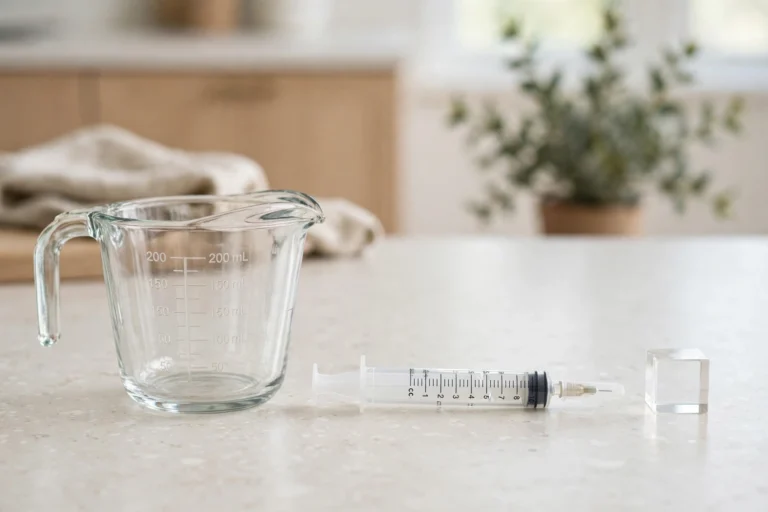
You have seen all three — mL on a juice bottle, cc on a syringe, and cm³ in a science book. It is fair to ask if they mean the same thing. A doctor says “5 cc.” A recipe says “250 mL.” A textbook says “250 cm³.” Are those amounts equal, or just close? The…
-
Liters to Milliliters (L to mL): The Complete Reverse Conversion Guide
A 2-liter bottle of water, a recipe that calls for 750 milliliters of milk, a medicine cup marked in milliliters — they all measure liquid volume, just in different units. Learning how to convert liters to ml is one of the easiest conversions in the metric system. There is only one number to remember, and…
-
How to Convert mL to L Without a Calculator (3-Second Decimal Trick)
Your recipe says 750 mL of milk, but your jug is marked in liters. You do not need a calculator here, and you do not need an app. Once you learn how to convert ml to l the easy way, you can do it in your head in about three seconds. The trick is simple:…
-
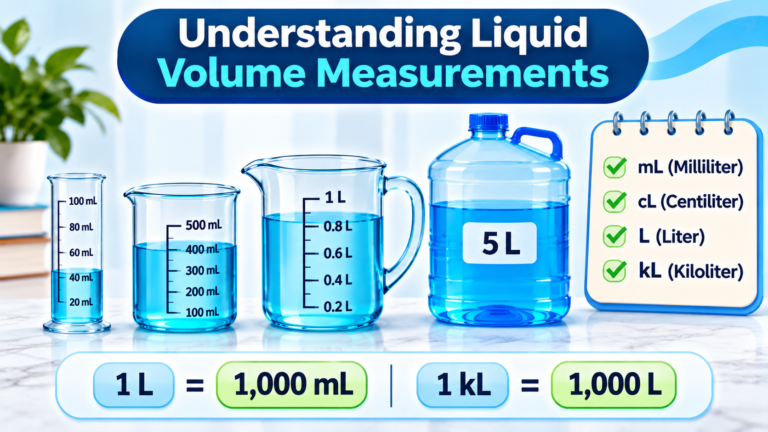
Understanding Liquid Volume Measurements and Metric Units
Liquid volume measurements tell us how much space a liquid occupies. They help us measure water, milk, juice, cooking oil, and many other liquids. The metric system uses units such as milliliters (mL), liters (L), and kiloliters (kL) to describe liquid volume. The right unit depends on the amount being measured. A small amount of…
-
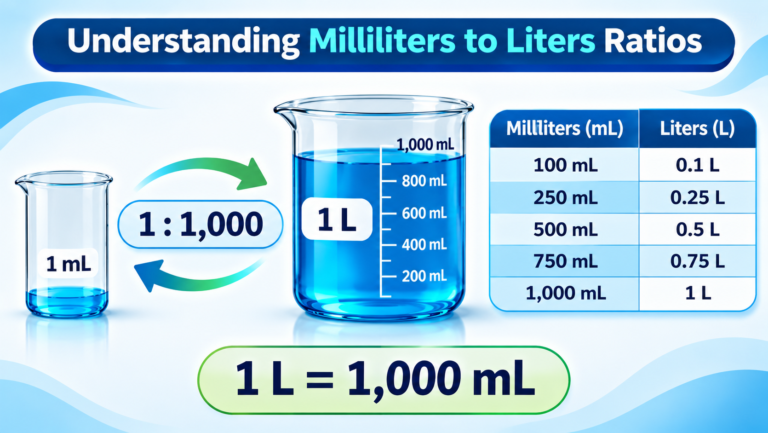
Understanding Milliliters to Liters Ratios
A ratio helps you compare two quantities and understand how they relate to each other. When comparing milliliters (mL) and liters (L), you must first express both measurements in the same unit. For example, 500 mL and 2 L use different units. Convert 2 L into 2,000 mL before writing the ratio. 500 : 2,000…
-
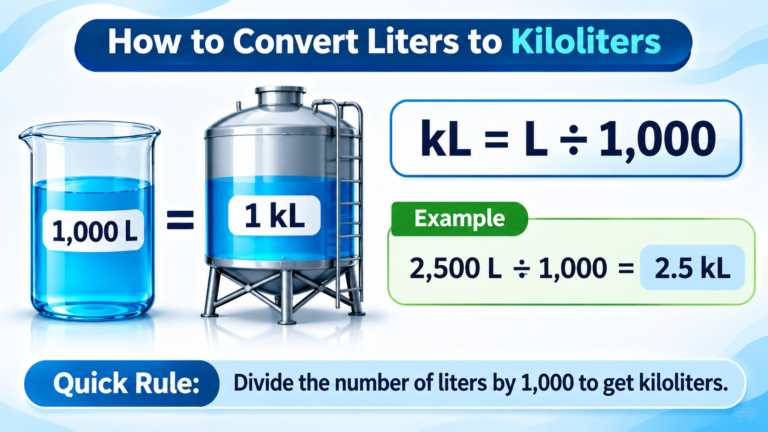
How to Convert Liters to Kiloliters
Converting liters to kiloliters is simple when you know the correct conversion factor. One kiloliter contains 1,000 liters. Therefore, you divide the number of liters by 1,000 to get kiloliters. For example, 350 liters equals 0.35 kiloliters. This guide explains the liters to kiloliters conversion formula, shows step-by-step examples, and provides a reference table. You…
-
公制容量換算表:毫升 (mL)、厘升 (cL)、公升 (L) 和千升 (kL)
公制系統使用不同的單位來測量液體容量。四個常用的單位是毫升 (mL)、厘升 (cL)、公升 (L) 和千升 (kL)。每個單位代表不同的液體量。毫升測量的是少量液體,而千公升測量的是大量液體。公制容量換算表可以幫助我們更能理解…
-
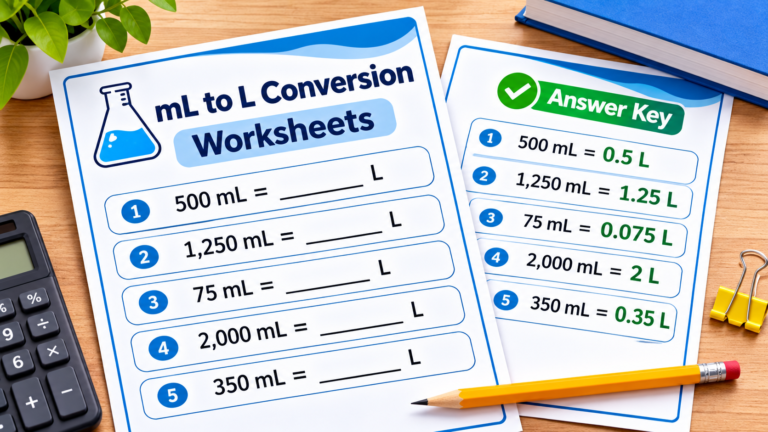
毫升到升的換算練習題目及答案
使用這些免費的測量練習題練習毫升 (mL) 和升 (L) 之間的單位換算。本資源包含入門練習、分年級練習、混合單位換算、實際應用問題。學生可以從簡單的測量題入手,逐步過渡到小數換算和多步驟問題。每張練習題都附有單獨的答案,方便學生核對答案。您將…
-
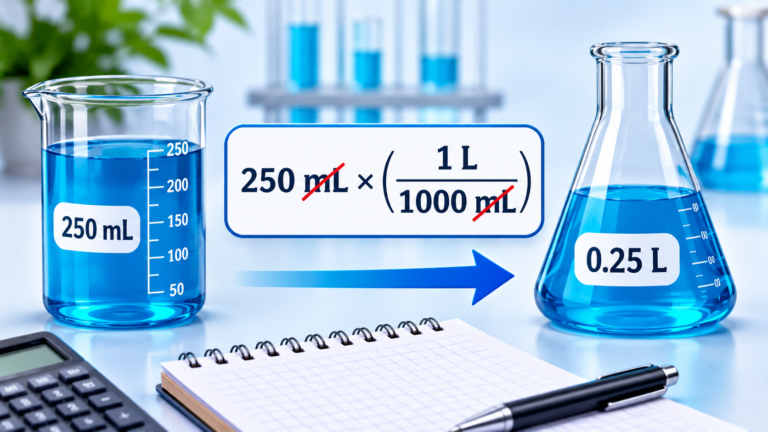
利用量綱分析法將毫升 (mL) 轉換為升 (L)。
要使用單位換算將毫升轉換為公升,只需將毫升數乘以換算係數 1 L / 1000 mL。毫升單位會相互抵消,最終結果以公升為單位。例如,250 mL × (1 L / 1000 mL) = 0.25 L。此方法適用於任何毫升數,並能確保單位正確。
-
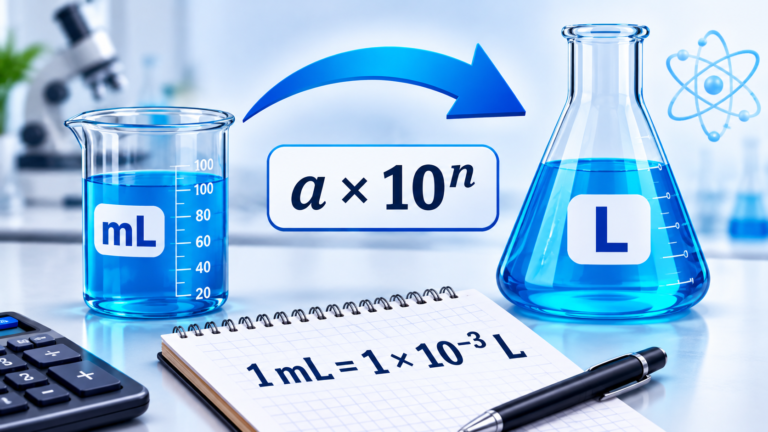
如何用科學數法將毫升 (mL) 轉換為升 (L)
要用科學計數法將毫升 (mL) 轉換為升 (L),首先將 mL 值除以 1000 得到升數。然後將結果寫成 1 到 10 之間的數字乘以 10 的冪。例如,1 mL = 0.001 L = 1 × 10⁻³ L。指數為負數是因為公升…