Liquid vs. Dry Ingredients: Why You Can’t Always Use mL to L Charts
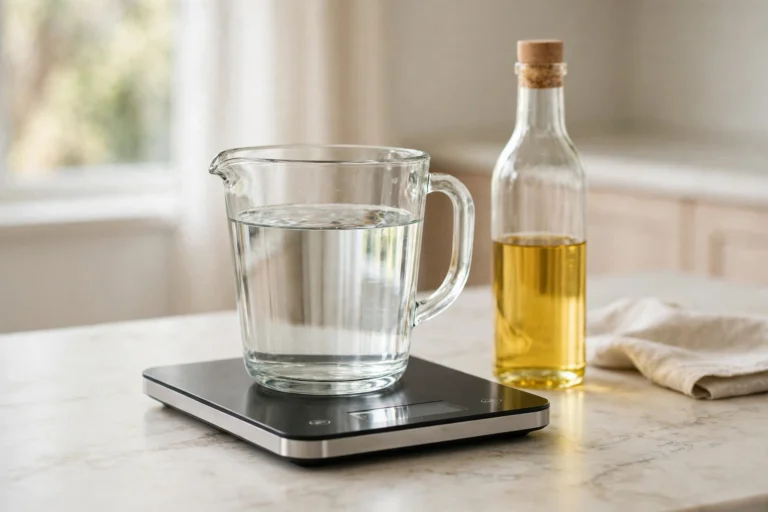
Milliliters measure volume — how much space something takes up. Grams measure mass — how much something weighs. For water, the two line up perfectly: 1 mL of water weighs exactly 1 gram. For almost everything else, they do not.
That is why a milliliter-to-liter chart works beautifully for water, milk, and oil, and fails quietly for flour, sugar, and rice. A cup of flour and a cup of water take up the same space, but they weigh very different amounts. Treat them the same and your recipe will be wrong.
This guide explains when milliliters work, when they do not, and how to measure dry ingredients properly.
Volume vs. Mass: The Core Difference
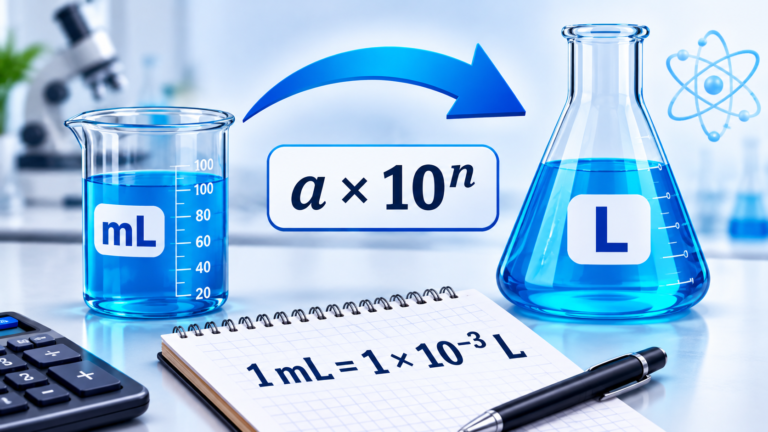
Volume is space. Mass is weight. A milliliter is a unit of volume — one thousandth of a liter. A gram is a unit of mass. The link between them is density: how much mass fits into a given volume.
Water has a density of 1 gram per milliliter, which is why the conversion is so clean. Milk is slightly denser, about 1.03 grams per milliliter. Vegetable oil is lighter, about 0.92 grams per milliliter. Honey is much denser, about 1.42 grams per milliliter.
Dry ingredients vary far more. A milliliter of flour weighs only about 0.5 to 0.6 grams, because flour is full of air. A milliliter of granulated sugar weighs about 0.85 grams. A milliliter of table salt weighs about 1.2 grams. The same volume, three very different weights.
| Ingredient | 1 cup (US, 236.6 mL) weighs | Density |
|---|---|---|
| Water | 237 g | 1.00 g/mL |
| Milk | 244 g | 1.03 g/mL |
| Vegetable oil | 218 g | 0.92 g/mL |
| Honey | 336 g | 1.42 g/mL |
| Granulated sugar | 200 g | 0.85 g/mL |
| All-purpose flour (spooned) | 120 g | 0.51 g/mL |
| All-purpose flour (scooped) | 150 g | 0.63 g/mL |
| Table salt | 288 g | 1.22 g/mL |
| Butter | 227 g | 0.96 g/mL |
| Rolled oats | 90 g | 0.38 g/mL |
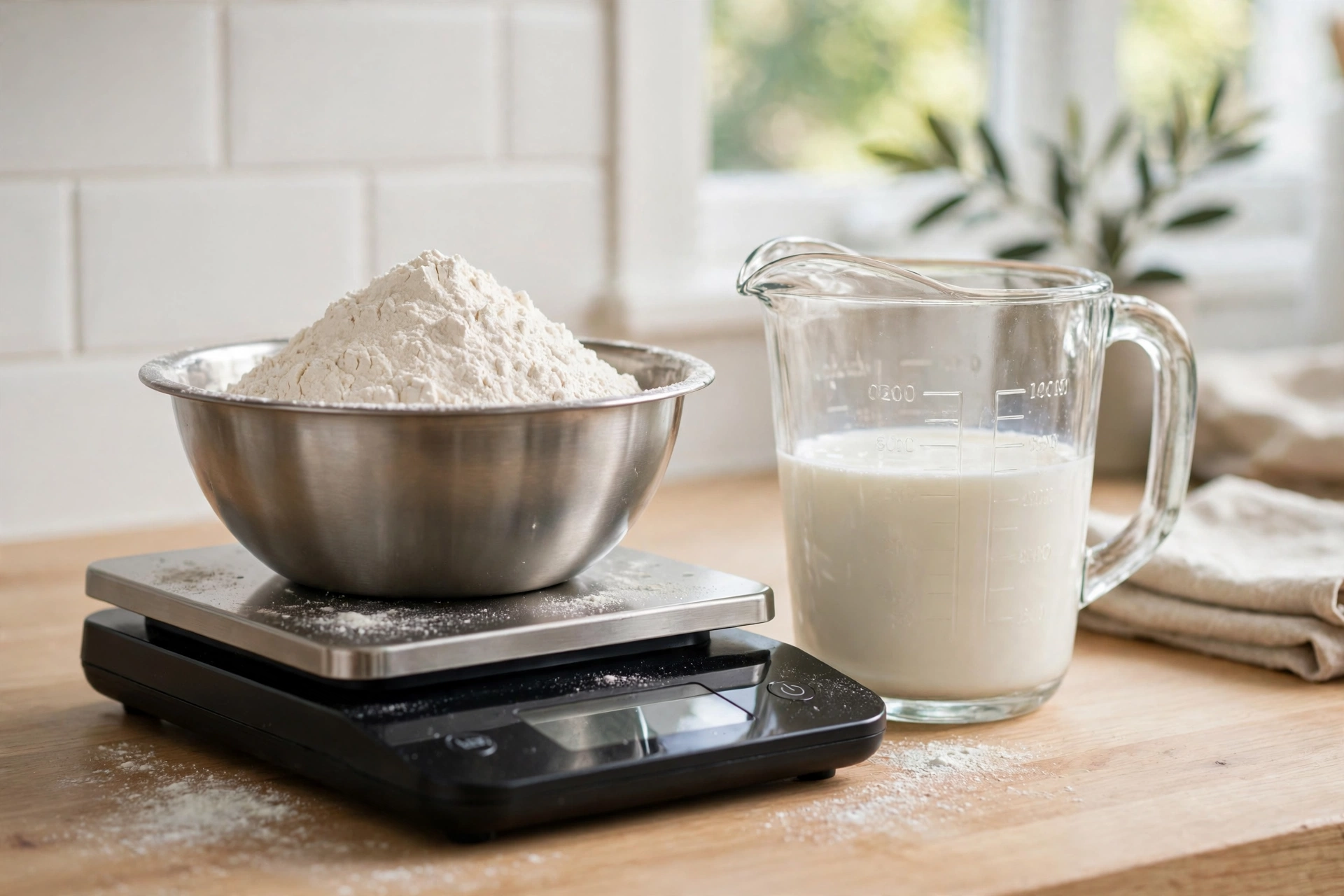
The flour row shows the real problem. The same cup of flour can weigh 120 grams or 150 grams depending on how you fill it — a difference of 25 percent. No volume chart can fix that, because the volume is the same either way. Only a scale tells you the truth.
When Milliliters Work Perfectly
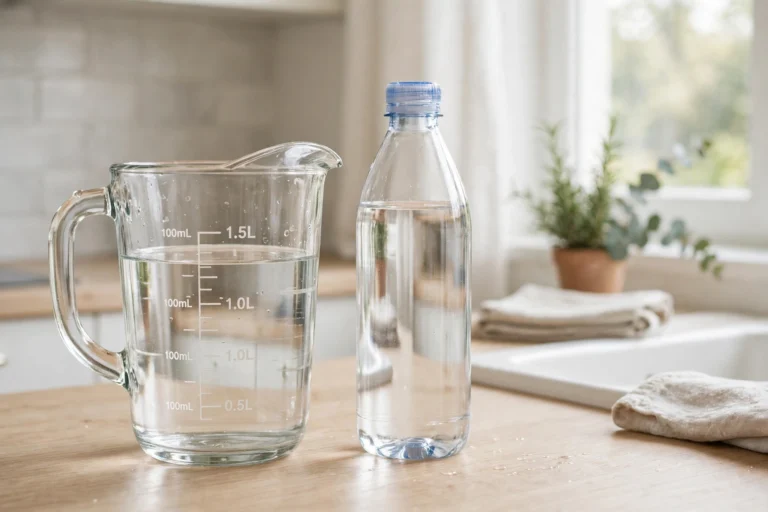
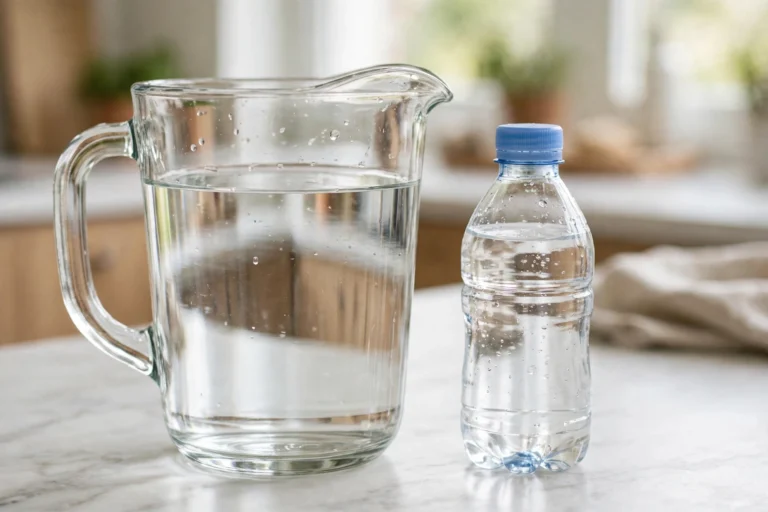
Use milliliters for anything that pours and fills its container evenly: water, milk, cream, juice, stock, oil, vinegar, syrup, and melted butter. For these, a measuring jug with milliliter markings is accurate and fast.
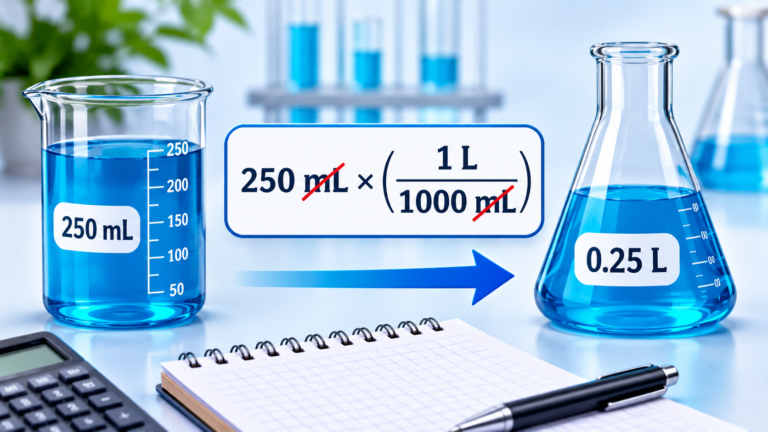
Milliliters also work for conversions between liquid units. One liter is 1000 mL, one metric cup is 250 mL, and one US cup is 236.6 mL. If a recipe calls for 500 mL of stock, you can measure it in any jug, in any country, and get the same result.
Small liquid amounts work in milliliters too. A teaspoon is 5 mL, a US tablespoon is about 14.8 mL, and a metric tablespoon is 20 mL. Measuring vanilla extract or lemon juice in milliliters is more accurate than counting spoonfuls, especially when you scale a recipe up or down.
When Milliliters Fail: Dry Ingredients
Dry ingredients do not fill space evenly. Flour traps air between its particles. How much air depends on how the flour was stored, whether it was sifted, and how you scooped it. Scooping directly from the bag packs the flour down and can add 30 grams per cup. Spooning it lightly into the cup and leveling it off gives a much lighter result.
Sugar is more consistent than flour, because its crystals pack evenly, but brown sugar changes everything — it is measured packed, so a cup of packed brown sugar weighs about 220 grams, while the same cup loosely filled weighs far less.
Rice, oats, and other grains have the same problem in a different form: the gaps between grains vary with the grain size. A cup of rolled oats weighs about 90 grams; a cup of steel-cut oats weighs about 170 grams. Same volume, nearly double the weight.
This is why professional bakers and recipe developers weigh dry ingredients in grams. A recipe that says "120 grams of flour" means the same thing in every kitchen in the world. A recipe that says "1 cup of flour" means something different in every kitchen.
The Spoon-and-Level Method
If you do not have a scale, the spoon-and-level method is the best way to measure flour by volume. Fluff the flour in its container with a spoon, spoon it lightly into the measuring cup until it heaps above the rim, then level it off with the flat side of a knife. Never scoop the cup directly into the bag, and never tap the cup to settle the flour — both pack it down.
For sugar, spoon and level works too, except for brown sugar, which should be packed firmly into the cup. For cocoa powder, sift first if the recipe says so, because cocoa clumps badly and a packed cup can weigh far more than a sifted one.
Even with perfect technique, volume measuring of dry ingredients has an error of about 10 percent. A scale removes it entirely. A basic kitchen scale is inexpensive, and once you start using it, you will wonder how you cooked without one.
Converting a Recipe: A Worked Example
Take a simple muffin recipe that calls for 2 cups of flour, 1 cup of sugar, 1 cup of milk, and half a cup of oil.
The liquids are easy. One US cup of milk is 236.6 mL, so the recipe needs 236.6 mL of milk. Half a cup of oil is 118.3 mL. Those numbers are exact and will be right every time.
The dry ingredients are not. Two cups of flour could be 240 grams if spooned lightly, or 300 grams if scooped from the bag — a 60-gram difference, which is a quarter of the flour in the recipe. One cup of sugar is about 200 grams, which is reliable enough, but the flour is the problem.
The fix is to convert the dry ingredients to grams and keep the liquids in milliliters. Write it on the recipe card: 240 grams of flour, 200 grams of sugar, 236.6 mL of milk, 118.3 mL of oil. Now the recipe is repeatable, and anyone who makes it will get the same muffins.
Common Mistakes to Avoid
Weighing flour by the cup and expecting consistency. A cup of flour can vary by 30 grams depending on technique. Weigh it instead.
Using a liquid measuring jug for flour. Jugs are for liquids. Dry ingredients need a cup you can level off, or better, a scale.
Assuming 1 mL equals 1 gram for everything. That is only true for water. Oil is lighter, honey is heavier, and flour is far lighter per milliliter.
Measuring brown sugar loosely. Brown sugar is always measured packed unless the recipe says otherwise. Loose brown sugar can be 20 percent less than the recipe expects.
Scaling a recipe by volume for dry ingredients. Doubling the cups doubles the error. Convert dry ingredients to grams before scaling.
Using the same cup for liquids and dry ingredients. A liquid jug and a dry measuring cup are different tools. A jug cannot be leveled, and a dry cup cannot show a meniscus. Use each for its own job.
Frequently Asked Questions
Can I use mL to measure flour? You can, but it is not accurate. A cup of flour weighs 120 to 150 grams depending on how it is packed, so the same volume gives different results. Weigh flour in grams instead.
Is 250 mL of flour the same as 250 grams? No. 250 mL of flour weighs only about 125 to 150 grams, because flour is much less dense than water. Only water has 1 mL equal to 1 gram.
How many grams is 1 cup of sugar? About 200 grams for granulated sugar, and about 220 grams for packed brown sugar.
Why do professional bakers use grams? Because weight does not depend on how an ingredient is packed, scooped, or stored. 120 grams of flour is always 120 grams, in any kitchen.
Can I measure milk in grams instead of mL? Yes. Milk is about 1.03 grams per milliliter, so 250 mL of milk weighs about 258 grams. The difference is small enough that most recipes treat them as equal.
What is the best way to measure sticky ingredients like honey? Weigh them in grams, or oil the measuring jug lightly first so the honey slides out. Remember honey is dense: 100 mL weighs about 142 grams.
Conclusion
Milliliters measure volume and grams measure mass, and the two only match for water. For liquids that pour — water, milk, stock, oil — milliliters are exact, fast, and universal. For dry ingredients — flour, sugar, oats, cocoa — volume is unreliable, because packing and air change the weight in the same cup by as much as 25 percent.
The practical rule is simple: measure liquids in milliliters and dry ingredients in grams. Convert a recipe once, write both numbers on the card, and it will work the same way every time, in any kitchen, in any country. A scale and a measuring jug cost very little, and together they remove the biggest source of error in home cooking.