US Cups vs. Metric Cups vs. Milliliters: Avoiding Recipe Disasters
A recipe says "1 cup of milk." You measure it, follow every step, and the cake still comes out wrong — too wet, too dry, or just not right. The problem may not be your cooking at all. It may be your cup.
"Cup" is not one measurement. A US cup, a metric cup, and a UK cup hold different amounts of liquid, and the gap between them is big enough to ruin a recipe. Once you know the numbers in milliliters, the confusion disappears — because milliliters never change.
This guide explains exactly how many milliliters are in each kind of cup, why the sizes differ, and how to convert between them without guessing.
How Many Milliliters in Each Cup?
Here are the numbers that matter. A US customary cup holds 236.6 mL. A metric cup holds exactly 250 mL. A UK imperial cup, based on the old imperial half-pint, holds about 284 mL. A US legal cup — the one used on American nutrition labels — holds 240 mL. A Japanese cup holds 200 mL.
The difference between a US cup and a metric cup is 13.4 mL per cup. That sounds small, but it adds up fast. A recipe with four cups of liquid made with a metric cup instead of a US cup adds more than 53 mL of extra liquid — nearly a quarter of a cup. In baking, where the balance of flour, liquid, and leavening is delicate, that is enough to change the result.
| Cup type | Milliliters | Used in |
|---|---|---|
| US customary cup | 236.6 mL | US recipes, American measuring cups |
| US legal cup | 240 mL | US nutrition labels |
| Metric cup | 250 mL | Australia, New Zealand, Canada, most metric recipes |
| UK imperial cup | 284 mL | Older British recipes |
| Japanese cup | 200 mL | Japanese recipes, rice cookers |
The metric cup is the easiest to work with because it is a round number: one metric cup is exactly a quarter of a liter. Four metric cups make exactly 1 liter. The US cup has no such neat relationship — four US cups make 946.4 mL, which is about 54 mL short of a liter.
Why Are There Different Cups?
Cups grew out of everyday kitchen practice long before standard measurements existed. People measured with the cups they drank from, and those cups were different sizes in different countries.
The United States kept its customary system, based on the fluid ounce. A US cup is 8 US fluid ounces, and one US fluid ounce is about 29.57 mL, so 8 times 29.57 gives 236.6 mL.
Countries that adopted the metric system defined the cup in round metric terms instead. Australia and New Zealand settled on 250 mL because it divides neatly into a liter. The United Kingdom once used an imperial cup of 10 imperial fluid ounces, about 284 mL, based on the imperial pint of 568 mL.
The US legal cup of 240 mL came later, created for nutrition labeling so that serving sizes would be easy to calculate. It is not the cup used in American recipes — that is the 236.6 mL customary cup — but it appears on the back of almost every packaged food in the United States.
The Conversion Formulas
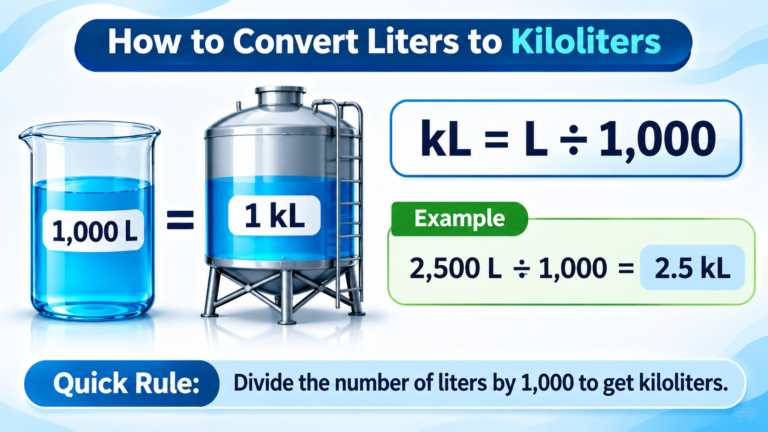
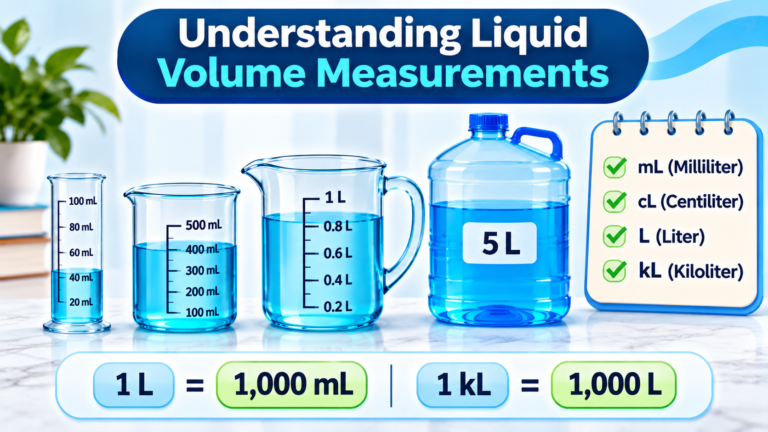
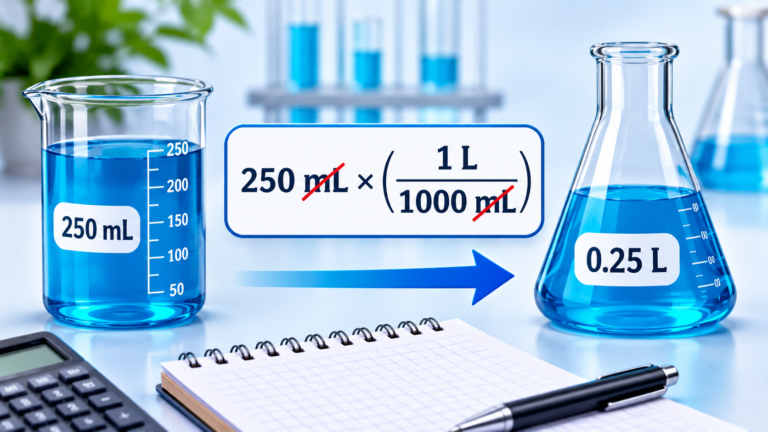
You only need two formulas, plus the rule that 1 liter equals 1000 mL.
To convert US cups to milliliters, multiply by 236.6. One US cup is 236.6 mL, two US cups are 473.2 mL, and three US cups are 709.8 mL.
To convert metric cups to milliliters, multiply by 250. One metric cup is 250 mL, two are 500 mL, and four are exactly 1000 mL, or 1 liter.
To convert milliliters to US cups, divide by 236.6. So 500 mL is about 2.11 US cups, and 1 liter is about 4.23 US cups. To convert milliliters to metric cups, divide by 250. So 500 mL is exactly 2 metric cups, and 1 liter is exactly 4 metric cups.
To switch between the two cups directly, remember that one metric cup equals about 1.057 US cups, and one US cup equals about 0.946 metric cups. In practice, if a recipe calls for US cups and you only have a metric measuring cup, fill it to just below the 1-cup line — about 237 mL — for each cup.
A Worked Example: The Cake That Failed
Imagine an American recipe for a sponge cake that calls for 2 cups of milk and 2 cups of flour measured by volume. You are in Australia, so you use a metric cup.
Two metric cups of milk give you 500 mL. The recipe wanted 473.2 mL. You have added 26.8 mL of extra milk — more than a tablespoon and a half. The batter is thinner, the cake takes longer to bake, and the center may sink.
Now scale that up. A soup recipe calling for 8 cups of stock needs 1,892.8 mL with US cups. With metric cups you would add 2,000 mL — more than 100 mL extra, about half a cup.
The fix is simple: when a recipe comes from the United States, use 236.6 mL per cup. When it comes from Australia or a metric cookbook, use 250 mL per cup. And when you are not sure where the recipe comes from, check the other measurements — if it also uses Fahrenheit and ounces, it is almost certainly American.
Measuring Cups vs. Drinking Cups
A measuring cup is a tool with marked volumes. A drinking cup, mug, or teacup is not. This is one of the most common sources of error in home cooking.
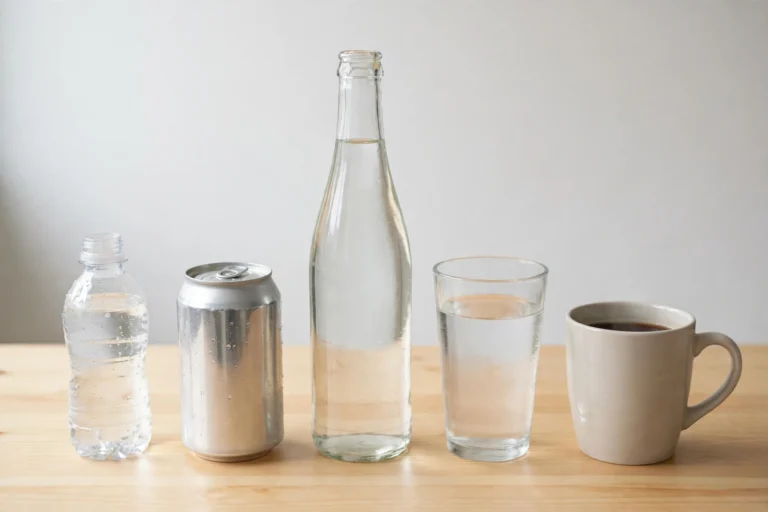
A typical coffee mug holds 300 to 350 mL, which is more than a cup by any definition. A small teacup holds 150 to 200 mL, which is less than a cup. A large soup mug can hold 400 mL or more. If a recipe says "1 cup" and you use a mug, you could be adding 50 mL too much or 80 mL too little without realizing it.
Always use a proper measuring jug or a marked measuring cup for liquids. Glass measuring jugs usually show milliliters, US cups, and fluid ounces side by side, so you can read whichever unit the recipe uses. For the most accurate results, especially in baking, weigh liquids on a kitchen scale instead — 1 mL of water weighs exactly 1 gram, so 250 mL of water is 250 grams.
Which Cup Should You Use?
Use the cup the recipe was written with. That is the only rule that matters. An American recipe expects 236.6 mL per cup. An Australian or New Zealand recipe expects 250 mL per cup. A Japanese recipe expects 200 mL per cup.
If you cook from recipes from many countries, the simplest solution is to stop using cups altogether and convert everything to milliliters. A kitchen jug with milliliter markings costs very little, and milliliters are the same everywhere in the world. Write the milliliter amount next to the cup amount in your favorite recipes, and you will never have to guess again.
For baking, go one step further and use grams. Flour, sugar, and butter all behave differently by volume, but their weight never changes. A cup of flour can weigh anywhere from 120 to 150 grams depending on how it is scooped, while 120 grams is always 120 grams. Many professional bakers work only in grams and milliliters for exactly this reason.
Common Mistakes to Avoid
Assuming all cups are the same. A US cup and a metric cup differ by 13.4 mL, and a UK cup differs by nearly 50 mL from a US cup. Always check which cup the recipe means.
Using a mug as a measuring cup. Mugs hold 300 to 400 mL, far more than any standard cup. Use a marked measuring jug instead.
Mixing US and metric tablespoons with cups. A metric tablespoon is 20 mL and a US tablespoon is about 14.8 mL. Converting everything to milliliters first avoids the mismatch.
Forgetting the US legal cup. Nutrition labels use 240 mL per cup, not 236.6 mL. The difference is small, but it explains why a label’s "1 cup" serving may not match your measuring cup exactly.
Scaling a recipe without converting. Doubling a recipe doubles the error too. Four extra cups at 13.4 mL each is more than 50 mL of extra liquid — convert to milliliters before you scale.
Frequently Asked Questions
How many mL is a US cup? A US customary cup is 236.6 mL. The US legal cup used on nutrition labels is 240 mL.
How many mL is a metric cup? A metric cup is exactly 250 mL, or one quarter of a liter.
What is the difference between a US cup and a metric cup? 13.4 mL per cup. A metric cup holds about 5.7 percent more than a US cup.
Can I use a metric cup for an American recipe? You can, but fill it to 236.6 mL instead of the full 250 mL line, or convert the whole recipe to milliliters first.
Conclusion
A US cup holds 236.6 mL, a metric cup holds exactly 250 mL, a US legal cup holds 240 mL, a UK imperial cup holds about 284 mL, and a Japanese cup holds 200 mL. The difference between the two most common cups is only 13.4 mL, but across a whole recipe it is enough to change the result — especially in baking.
The safest habit is to convert every recipe to milliliters before you start cooking. Milliliters are the same in every country, they divide neatly into liters, and a marked measuring jug makes them easy to use. Once you know your cup, you will never have to wonder why a trusted recipe came out wrong.